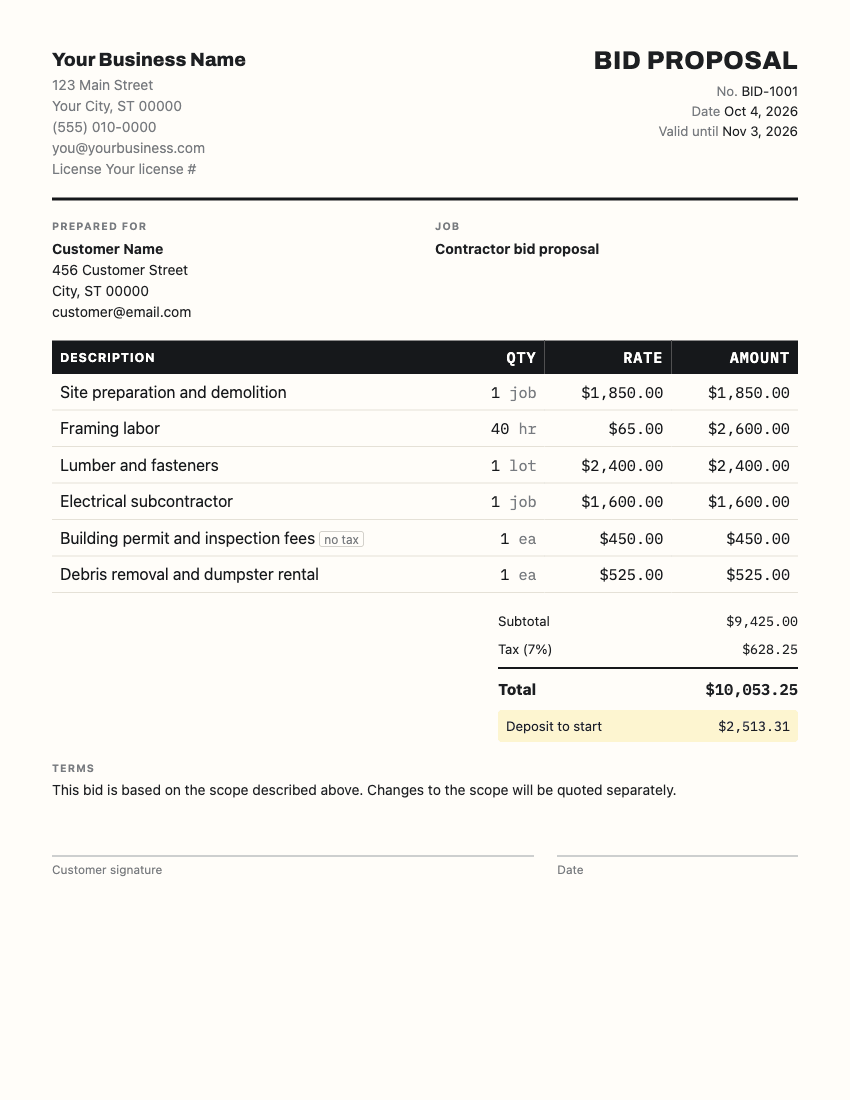
| Description | Qty | Rate | Amount |
|---|---|---|---|
| Site preparation and demolition 1 job × $1,850.00 |
1 job | $1,850.00 | $1,850.00 |
| Framing labor 40 hr × $65.00 |
40 hr | $65.00 | $2,600.00 |
| Lumber and fasteners 1 lot × $2,400.00 |
1 lot | $2,400.00 | $2,400.00 |
| Electrical subcontractor 1 job × $1,600.00 |
1 job | $1,600.00 | $1,600.00 |
| Building permit and inspection fees no tax 1 ea × $450.00 |
1 ea | $450.00 | $450.00 |
| Debris removal and dumpster rental 1 ea × $525.00 |
1 ea | $525.00 | $525.00 |
Free Contractor Bid Proposal Template
General contractors juggle materials, subcontractors, permits and labor on every job. A clear document that separates each cost line keeps the client informed and protects your margin when the scope changes. The template below is pre-filled with sample contractor line items — replace the prices with your own and download a PDF.
Pricing from plans? Measure wall lengths, floor areas and fixture counts on the PDF with our free PDF takeoff tool, then send the quantities into an estimate. Works on Mac, nothing uploaded.
When should you use a contractor bid?
A contractor bid is a firm offer to win a job, often against other contractors. General contractors and property managers compare bids line by line, so a clear scope, honest exclusions and a validity date make yours easier to choose.
What should a contractor bid include?
For contractor work
- A scope of work that names every phase, from demolition to final clean-up
- Separate lines for labor, materials and subcontractors so changes are easy to price
- Permit and inspection fees listed on their own, usually without tax
- A payment schedule: deposit, progress payments and final balance
- A change-order clause stating that extra work is billed separately
On every bid
- Exclusions and assumptions the price depends on
- Your schedule or start date
- How long the bid is valid and how to accept it
What do contractor bid line items look like?
Sample prices for illustration only. Your rates depend on your market, materials and labor costs.
| Line item | Qty | Rate | Amount |
|---|---|---|---|
| Site preparation and demolition 1 job × $1,850.00 | 1 job | $1,850.00 | $1,850.00 |
| Framing labor 40 hr × $65.00 | 40 hr | $65.00 | $2,600.00 |
| Lumber and fasteners 1 lot × $2,400.00 | 1 lot | $2,400.00 | $2,400.00 |
| Electrical subcontractor 1 job × $1,600.00 | 1 job | $1,600.00 | $1,600.00 |
| Building permit and inspection fees 1 ea × $450.00 | 1 ea | $450.00 | $450.00 |
| Debris removal and dumpster rental 1 ea × $525.00 | 1 ea | $525.00 | $525.00 |

What mistakes should you avoid on a contractor bid?
- Rolling overhead and profit into labor rates, so a scope cut quietly removes your margin
- Leaving out permit, dumpster and inspection costs because they feel like admin, not work
- Pricing hidden conditions as if they won't happen instead of listing an allowance or unit price
- No written change-order process, so extra work gets argued about at the final invoice
Not sure how to price the work? Read how contractor jobs are usually priced.
How do you fill out this contractor bid template?
- Add your company details and license number
- Enter the project name, owner and site address
- Break the scope into line items
- List exclusions and assumptions in the notes
- Set how long the bid is valid, then download or send it
What other contractor templates are there?
Frequently asked questions
What is the difference between a contractor estimate and a bid?
An estimate is an approximate price that can change as the job is better understood. A bid is a firm price submitted to win a job, often in competition with other contractors, and is usually binding once accepted.
General questions about bids are answered in our bid proposal template guide.
Sources
- Renovation, Repair and Painting Program: Contractors — U.S. Environmental Protection Agency. Firms paid to do work that disturbs paint in homes and child-occupied facilities built before 1978 must be EPA-certified and follow lead-safe work practices.
- 15 U.S. Code § 7001 (ESIGN Act) — Legal Information Institute, Cornell Law School. Under federal law, a signature or contract can't be denied legal effect just because it is electronic.